
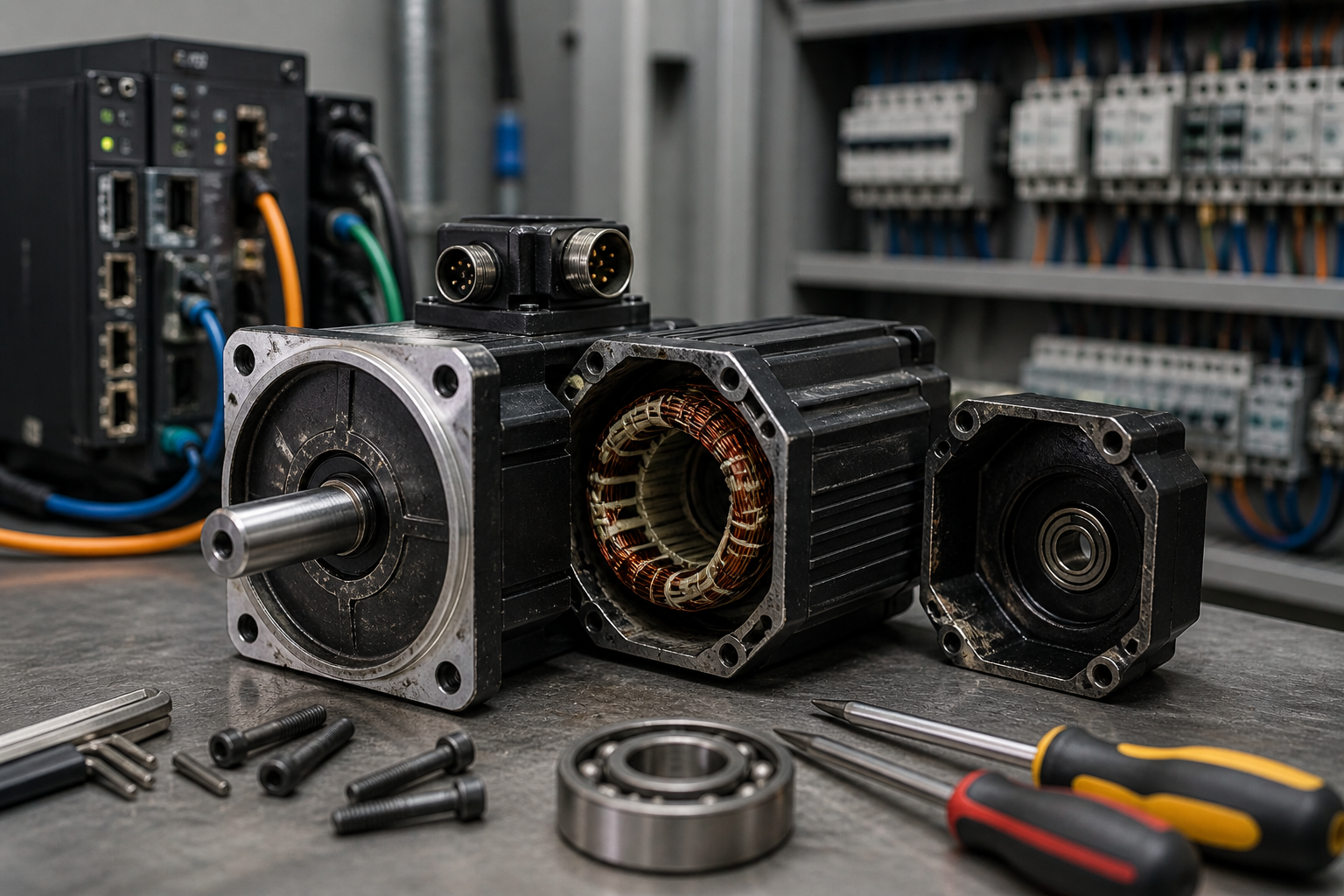
Servo motors play a critical role in modern automation systems, delivering precise motion control for everything from conveyors to robotic arms. When a servo motor fails, it can bring production to a halt, leading to costly downtime and urgent repair needs. Understanding the most common causes of failure is essential for effective servo motor troubleshooting and long-term system reliability.
This guide breaks down the leading reasons servo motors fail in industrial environments and how to identify early warning signs before major issues occur.
Servo motors operate under demanding conditions, often running continuously in environments exposed to heat, vibration, and electrical stress. Over time, even small issues can escalate into full system failures if not addressed early.
Most failures fall into a few key categories:
Identifying which category your issue falls into is the first step in effective troubleshooting.
Excessive heat is one of the most common causes of servo motor failure.
Overheating can result from excessive load, poor ventilation, or failing cooling systems. High temperatures break down internal insulation and shorten component lifespan.
Ensure proper airflow around the motor and verify that cooling systems are functioning. Monitor load conditions to confirm the motor is not being overworked.
Servo motors rely on precision bearings to maintain smooth rotation. Over time, these components wear down.
Continuous operation, misalignment, and lack of lubrication can accelerate bearing wear.
Listen for abnormal sounds and inspect for vibration. Regular maintenance and alignment checks help extend bearing life.
Electrical problems are a major contributor to servo motor failure and are often difficult to detect without proper diagnostics.
Voltage fluctuations, poor wiring connections, and damaged cables can disrupt motor performance. Over time, these issues may damage internal windings.
Inspect wiring, connectors, and incoming voltage. Consistent power quality is critical for reliable operation.
Encoders provide the feedback necessary for precise motion control. When they fail, the entire system can lose accuracy.
Encoders can fail due to contamination, electrical noise, or general wear over time.
Review encoder signals and connections. If feedback data appears inconsistent, the encoder may need repair or replacement.
Industrial environments often expose servo motors to dust, moisture, and debris.
Contaminants can enter the motor housing or affect surrounding components, leading to reduced efficiency and eventual failure.
Inspect enclosures and seals. Ensure motors are properly protected based on the environment they operate in.
Even a high-quality servo motor can fail prematurely if installed incorrectly.
Misalignment between the motor and connected components creates additional stress on bearings and internal parts.
Verify proper alignment and mounting. Installation accuracy plays a major role in long-term reliability.
Servo motors depend on drives for control. When the drive malfunctions, it can impact motor performance.
Drive failures can result from electrical issues, overheating, or internal component degradation.
Evaluate the servo drive alongside the motor. In many cases, the issue may originate from the drive rather than the motor itself.
While many issues can be identified through servo motor troubleshooting, recurring failures or internal damage typically require professional repair services.
Consider repair when:
Professional servo motor repair services can restore functionality, replace worn components, and extend the life of your equipment without the cost of full replacement.
The best way to reduce downtime is to prevent failures before they happen.
A proactive maintenance strategy helps identify small issues early and reduces the likelihood of unexpected breakdowns.
Servo motor failures are often the result of gradual wear, environmental exposure, or overlooked maintenance issues. By understanding the most common causes and applying structured troubleshooting methods, maintenance teams can diagnose problems faster and make more informed repair decisions.
When issues go beyond routine fixes, working with experienced industrial repair specialists ensures your systems are restored quickly and continue operating at peak performance ⚙️
Lorem ipsum dolor sit amet, consectetur adipiscing elit. Suspendisse varius enim in eros elementum tristique.

Lorem ipsum dolor sit amet, consectetur adipiscing elit. Suspendisse varius enim in eros elementum tristique.
Lorem ipsum dolor sit amet, consectetur adipiscing elit. Suspendisse varius enim in eros elementum tristique.

Lorem ipsum dolor sit amet, consectetur adipiscing elit. Suspendisse varius enim in eros elementum tristique. Duis cursus, mi quis viverra ornare, eros dolor interdum nulla, ut commodo diam libero vitae erat. Aenean faucibus nibh et justo cursus id rutrum lorem imperdiet. Nunc ut sem vitae risus tristique posuere.
Lorem ipsum dolor sit amet, consectetur adipiscing elit. Suspendisse varius enim in eros elementum tristique. Duis cursus, mi quis viverra ornare, eros dolor interdum nulla, ut commodo diam libero vitae erat. Aenean faucibus nibh et justo cursus id rutrum lorem imperdiet. Nunc ut sem vitae risus tristique posuere.
Lorem ipsum dolor sit amet, consectetur adipiscing elit. Suspendisse varius enim in eros elementum tristique. Duis cursus, mi quis viverra ornare, eros dolor interdum nulla, ut commodo diam libero vitae erat. Aenean faucibus nibh et justo cursus id rutrum lorem imperdiet. Nunc ut sem vitae risus tristique posuere.


Ready to get started? Contact us.
Whether you need a repair/service or have a question, please feel free to send us a message using the form below.